
Parents Uncharted
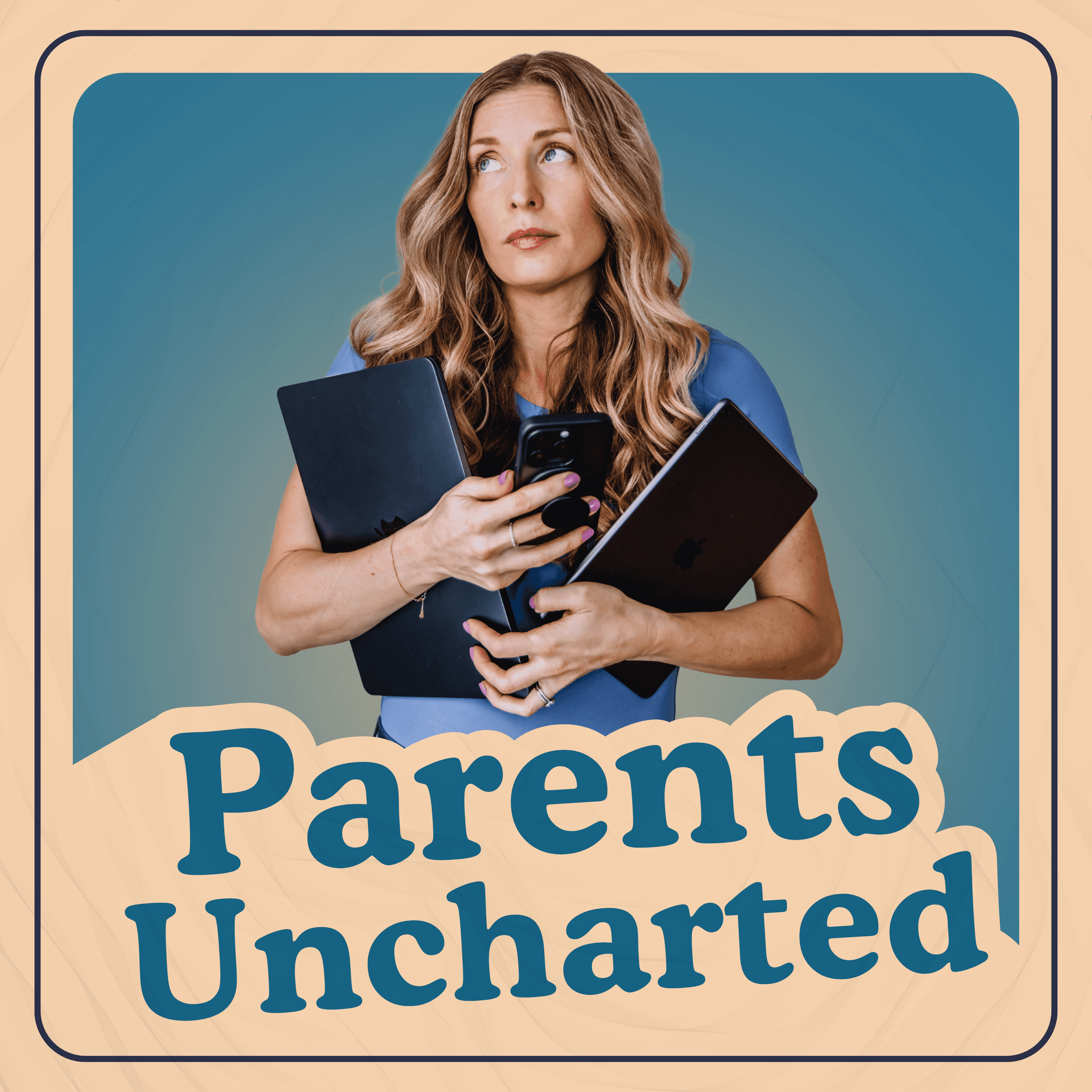
Parents Uncharted is a new podcast that explores the unprecedented challenges modern parents face while navigating the digital landscape and social media pressures.
Hosted by Sarah Adams - internationally recognized child advocate and creator of Mom.Uncharted - the podcast dives into the modern realities of parenting Generation Alpha: managing screen time, social media, mental health, and finding hope amid anxiety-inducing headlines.
Through expert interviews and candid stories from real parents, Parents Uncharted offers insight, empathy, and actionable advice to help families thrive in today’s complex digital world. Each episode blends heart and research to uncover how technology, culture, and connection are reshaping childhood - and how parents can adapt with confidence.
If you’ve ever wondered how to raise resilient, grounded, and future-ready kids in an online world, this podcast is your trusted guide.
Sarah is on a mission to inspire the conversations parents need to have - even when they aren’t quite ready for them. She also explores topics at the intersection of technology, climate change, and mental health.
Because there’s no map for modern parenting - but we can chart it together.
About the Host
Sarah Adams is the creator of the online communities Mom.Uncharted and Kids Are Not Content. Proudly named to the TIME 100 Creators List, she is passionate about helping parents rethink how to share, protect, and raise kids in an online world.
Recent Episodes
The latest conversations—freshly published and ready to play.
- NewView episode When Your Daughter Wants to Be a Tradwife with Sara PetersenYesterday37:14EpisodeEpisode Page
When Your Daughter Wants to Be a Tradwife with Sara Petersen
What happens when the “simpler life” our daughters see online is someone else’s carefully built business?
Beautiful kitchens, homemade meals, smiling children and a husband who takes care of everything. Tradwife content sells an appealing version of marriage and motherhood, but what does it leave out? And what should parents understand about the messages reaching young women?
In this episode of Parents Uncharted, Sarah sits down with writer and cultural critic Sara Petersen, author of Momfluenced: Inside the Maddening, Picture-Perfect World of Mommy Influencer Culture, to unpack the tradwife fantasy and the business behind it.
From Ballerina Farm and Nara Smith to younger creators embracing traditional gender roles, they explore why this content is so compelling, what happens when influencers distance themselves from the tradwife label, and whether a change in branding really changes the message.
They also make an important distinction between choosing to stay home with your children and selling an idealized version of motherhood online. Along the way, Sara considers what these images promise overwhelmed women, and why those promises can resonate when modern motherhood feels so unsupported.
Sara brings the conversation back to media literacy: the women presenting this lifestyle online often have careers, businesses and income of their own. Helping young people recognize that work, and think about financial independence, support and future choices—is a valuable place to begin.
For parents, this conversation offers an opening to ask: What does your child find appealing about this life, and what might they need to know beyond what’s in the frame?
More about Sara
Sara Petersen wrote a book about the many layers of momfluencer culture, MOMFLUENCED: Inside the Maddening, Picture-Perfect World of Mommy Influencer Culture, which you can read excerpts of in The Cut, TIME and Literary Hub.
For most of her career, Sara has written about motherhood and feminism, and her work has been featured in outlets such as the New York Times, Washington Post, Glamour, Refinery29 and elsewhere. For Harper’s Bazaar, she wrote about the cultishness of wellness momfluencers and her own love/hate relationship with momfluencers.
You can find more of her work on her website and follow her on Instagram, which she tends to avoid because Meta! Occasionally, she likes to rant about the ads.
Connect w/ Sarah
https://momuncharted.com/
https://www.instagram.com/mom.uncharted/
https://www.tiktok.com/@mom.uncharted
http://parentsuncharted.com/
https://www.instagram.com/parents.uncharted/
https://www.tiktok.com/@parents.uncharted
If this conversation made you think of another parent, please share it with them. Following, rating and reviewing Parents Uncharted helps more families find these conversations.
Because there’s no map for modern parenting, but together we can chart a better path.
Learn more about your ad choices. Visit megaphone.fm/adchoices
- View episode How Do We Raise Hopeful Kids with Anya KamenetzOct 14, 202638:56EpisodeEpisode Page
How Do We Raise Hopeful Kids with Anya Kamenetz
We hear a lot about what screens are doing to our kids, but what about the world we’re raising them in?
Climate change, the cost of living, political division, AI and an uncertain future are pressures that a screen time limit alone can’t solve. In this episode of Parents Uncharted, Sarah Adams, also known as Mom.Uncharted, sits down with journalist, author and former NPR education reporter Anya Kamenetz to explore parenting through the “polycrisis”: the overlapping crises shaping our families’ lives.
Sarah shares her own climate fears and a question from her child that stopped her in her tracks: “Will the world be okay when I grow up?” Anya offers practical ways to approach those conversations, beginning with finding support for our own feelings, listening to what our children are really asking and taking action together.
They also discuss AI in schools, children’s emotional attachment to chatbots, the environmental tensions of AI-assisted parenting and the lasting effects of COVID on education. Drawing on her podcast, Zero Reject: The Uncertain Future of Special Education, Anya explores the challenges families face in getting their children the support they need.
This is a conversation about being honest with our kids, finding hope amid uncertainty and remembering that families shouldn’t have to carry these challenges alone.
Chapters
(00:00) Parenting beyond screen time: Meet Anya Kamenetz
(02:17) What is the polycrisis—and how does it affect families?
(07:39) Why parents can’t carry all the responsibility
(10:30) AI in schools, chatbots and children’s learning
(14:13) AI’s environmental cost and the mental load of motherhood
(17:33) Talking to kids about climate change and our own fears
(20:38) “Will the world be okay when I grow up?”
(24:05) Revisiting The Art of Screen Time
(26:40) COVID’s lasting effects and special education support
(30:44) AI, careers and young people’s uncertain future
(32:33) Building resilience through community and shared action
More About Anya
Anya Kamenetz speaks, writes, and thinks about thriving and caring for others on a rapidly changing planet. Her newsletter on these topics is The Golden Hour. She covered education for many years including for NPR, where she co-created the podcast Life Kit: Parenting. Her last book was The Stolen Year: How Covid Changed Children’s Lives, And Where We Go Now. Kamenetz is currently an advisor to the Aspen Institute and the Climate Mental Health Network, working on new initiatives at the intersection of children, well-being, education, and climate change. Her next book, forthcoming from Bloomsbury, is about how to cope with the world right now.
Connect with Anya
Website- https://www.anyakamenetz.net/
Substack- https://thegoldenhour.substack.com/
Zero Reject Podcast- https://www.understood.org/en/podcasts/zero-reject
Connect w/ Sarah
https://momuncharted.com/
https://www.instagram.com/mom.uncharted/
https://www.tiktok.com/@mom.uncharted
http://parentsuncharted.com/
https://www.instagram.com/parents.uncharted/
https://www.tiktok.com/@parents.uncharted
Learn more about your ad choices. Visit megaphone.fm/adchoices
- View episode Raising Good Men in the Age of the Manosphere with Johnny ColeOct 7, 202650:52EpisodeEpisode Page
Raising Good Men in the Age of the Manosphere with Johnny Cole
Content note: This episode includes discussion of domestic violence, sexual violence, misogyny, and explicit language.
We spend a lot of time talking about the men we don’t want influencing our sons online, but who are we offering them instead?
In this episode, Sarah is joined by Johnny Cole, founder of Hey Brother Co., to talk about raising boys who feel connected, supported, and free to decide what kind of men they want to become. Drawing on his experience growing up in a home with domestic violence and his work mentoring teenage boys, Johnny shares how healthier role models helped him rethink what he had learned about masculinity.
Together, they explore what boys may be looking for in manosphere content, why dismissing their interests can shut down important conversations, and how Johnny’s “Brothercore” content and the Hey Brother House initiative are offering different stories about manhood, friendship, and belonging.
For parents wondering where to start, Johnny offers practical ways to build connection: notice and affirm kindness, keep making room for affection, read fiction together, and ask thoughtful questions about the messages boys encounter online. The conversation closes with a reminder that raising a kind, accountable son also means giving him space to make mistakes, and trusting that he can come to you when he does.
If you’re raising boys, or helping shape the world they’re growing up in, share this conversation with someone who wants to offer them more than a list of people not to follow. Because there’s no map for modern parenting, but together we can chart a better path.
Chapters
(00:00) Who are our sons supposed to look up to?
(01:18) Johnny’s story and finding different role models
(07:43) Men’s work, Brothercore, and healthier brotherhood
(15:03) Understanding the manosphere and its appeal
(23:26) What boys need beyond “don’t follow him”
(29:37) Changing the language and modelling something different
(33:13) Inside the Hey Brother House initiative
(37:29) What parents may be missing about boys
(40:40) Reading fiction and questioning online messages
(44:04) Hope, accountability, and room to make mistakes
About Johnny Cole
Johnny Cole is a young man that supports men and boys in escaping the “Man Box” ideals of masculinity. He is the founder of Hey Brother Co., a men’s work organization focused on shifting the narrative on masculinity through emotional skill-building, brotherhood, and accountability. As a survivor of childhood domestic violence at the hands of his father, a South African special forces veteran, Johnny intimately understands the consequences that patriarchal masculinity and unaddressed mental health issues have for our world.
Johnny creates spaces, online, in the gym, in schools, in men’s groups, and on retreats, where men and boys can unlearn patriarchal conditioning and build healthier relationships with themselves and others. He has worked with schoolboys across the United States, South Africa, and the Galápagos Islands, and his mentorship with high school boys in Oberlin, Ohio was featured in CBS Reports’ documentary Boys to Men: Why America’s Sons Are Struggling.
Connect with Johnny Cole
Connect with Sarah Adams
https://momuncharted.com/
https://www.instagram.com/mom.uncharted/
https://www.tiktok.com/@mom.uncharted
http://parentsuncharted.com/
https://www.instagram.com/parents.uncharted/
https://www.tiktok.com/@parents.uncharted
Learn more about your ad choices. Visit megaphone.fm/adchoices
- View episode Five Arguments for Posting Kids Online, and Why I DisagreeSep 30, 202628:32EpisodeEpisode Page
Five Arguments for Posting Kids Online, and Why I Disagree
“I won’t go faceless.” Sarah has been sent a growing number of posts from parents defending the decision to keep showing their children online, even as AI makes it easier to copy and manipulate a child’s image. In this solo episode, she takes on five of their most common arguments, including the claim that keeping children off social media somehow makes them invisible.
Sarah explains why audience, frequency, identifying details, and monetization matter, and why a child’s right to privacy deserves more weight as AI makes images easier to misuse. She also examines the incentives that reward parents for turning intimate moments into content, offers five questions to ask before posting, and makes the case for normalizing a more private childhood.
If someone sends you a post arguing that children are being “erased” when parents stop sharing them online, send them this episode. It’s a way to start a thoughtful conversation without giving the original post more engagement and if this episode helped you rethink what belongs online, share it with another parent who might be asking the same questions.
Chapters
(01:45) — The “I Won’t Go Faceless” Posts.
(05:00) — “The offender is responsible, so parents shouldn’t have to change”
(09:05) — “The internet isn’t the only place children can be harmed”
(12:28) — “Not posting children makes them invisible”
(17:00) — “You’re judging parents for a normal family photo”
(21:00) — “You can’t eliminate every risk, so why change anything?”
Connect with Sarah Adams:
https://momuncharted.com/
https://www.instagram.com/mom.uncharted/
https://www.tiktok.com/@mom.uncharted
http://parentsuncharted.com/
https://www.instagram.com/parents.uncharted/
https://www.tiktok.com/@parents.uncharted
Learn more about your ad choices. Visit megaphone.fm/adchoices
- View episode Growing Up Online with Youth Advocate Hanna GroverSep 23, 202648:43EpisodeEpisode Page
Growing Up Online with Youth Advocate Hanna Grover
Adults spend a great deal of time talking about what young people experience online, what they need and how we should protect them. But how often do we stop talking about young people and actually listen to them?
In this episode of Parents Uncharted, Sarah speaks with Hanna Grover, a youth advocate, researcher and recent high school graduate from British Columbia. Hanna is also the founder of Poet2Poet, an award-winning nonprofit that provides young poets with a safe space to share their writing, connect with one another and support their emotional well-being.
Hanna offers something especially valuable to the conversation about children and technology: lived experience.
She shares what it was like to enter high school during the pandemic, feel behind as friends received smartphones and watch social media become central to her generation’s friendships and identities. She also takes parents inside parts of the digital world they may not see, from relentless group chats and social pressure to graphic algorithmic content, online exploitation and the growing use of AI chatbots for companionship and mental health support.
Sarah and Hanna discuss why conversations about online safety need to move beyond screen-time limits and address what children are actually encountering on their screens. Hanna also reflects on British Columbia’s school cellphone restrictions, explaining how putting phones away created more meaningful conversations and helped students become more present during the school day.
Finally, they examine Canada’s proposed approach to restricting social media for children under 16. Hanna explains why many young people recognize that platforms can be harmful but remain wary of blanket bans, and why safer design, corporate accountability and meaningful youth participation must be part of the solution.
If adults want to build a healthier digital world for young people, we need to stop speaking only about them and start including them in the conversation.
More about Hannah
Hanna Grover, is a youth advocate, researcher, and public speaker driven by a commitment to health and wellbeing equity, children’s rights, and youth empowerment.
Her journey began with a simple belief: that young people deserve a seat at every table where decisions about their wellbeing are made. Today, that belief shapes everything she does, from founding Poet2Poet, a youth-focused organization that merges poetry with mental health, to working with national health organizations to create more equitable healthcare systems.
Through Poet2Poet, Hanna has helped thousands of youth across 70+ countries use writing as a tool for healing, connection, and advocacy. Alongside her many personal initiatives, she serves and collaborates with a range of organizations, advisory councils, academic teams, and advocacy platforms on projects that center youth voices for systems-level change.
She has had the privilege of speaking at national conferences and panels, often serving as the youngest voice in rooms filled with fellow policymakers, researchers, and professionals with a hope to empower others like her. Her advocacy has been recognized through awards like Canada’s Top 10 Under 18 Changemakers, British Columbia's Medal of Good Citizenship, and Surrey’s Top 25 Under 25.
Connect with Hanna
Poet2Poet: https://www.poet2poet.com
Instagram: https://www.instagram.com/hanna.grover_/
Connect with Sarah Adams:
Chapters
(00:00) Why adults need to listen to young people
(01:27) Growing up online during the pandemic
(05:36) Social media, screen-time rules and feeling left behind
(10:54) What parents would see inside a teenager’s phone
(13:49) Group chats, bullying and the pressure to stay connected
(18:40) Graphic content, algorithms and desensitization
(22:36) What parents should discuss beyond screen time
(25:15) How teenagers are using AI and chatbots
(28:42) Hanna’s experience with school cellphone restrictions
(30:57) What policymakers are missing about social media bans
(41:07) What young people need from their parents
Learn more about your ad choices. Visit megaphone.fm/adchoices
- View episode How to Talk to Kids About Porn with Chris McKennaSep 16, 202646:52EpisodeEpisode Page
How to Talk to Kids About Porn with Chris McKenna
Research from Common Sense Media found that nearly three in four teenagers have been exposed to online pornography, with the average first exposure happening around age 12. For many children, however, exposure happens even earlier, sometimes accidentally and through places parents would never expect.
So how early should parents begin talking about pornography? What can we say without giving young children information they aren’t ready for? And what should we do if our child tells us they have already seen something?
In this episode of Parents Uncharted, Sarah speaks with Chris McKenna, founder of Protect Young Eyes and author of Five Habits of the Tech-Ready Family: Raising Self-Led Kids in a Screen-Driven World.
Chris explains why families need to move away from the idea of one intimidating “porn talk” and toward short, age-appropriate conversations that begin early and continue as children grow. He shares simple language parents can use with younger children, including “put it down and tell someone” and explains when it may be helpful to introduce the word pornography.
Sarah and Chris also discuss how children can encounter explicit content through social media, gaming platforms, group chats, school-issued devices, in-app browsers and other people’s phones. Chris explains why filters alone are not enough and walks parents through his layered approach to online protection, beginning with the parent-child relationship.
Most importantly, they discuss how a parent’s first reaction can determine whether a child feels safe coming back. Children who encounter pornography need calm, connection and reassurance, not shame or panic.
These conversations don’t need to be perfect, graphic or fear-based. They simply need to begin.
More About Chris:
Chris McKenna is the Founder of Protect Young Eyes and President of The Better Tech Project. Author of 5 Habits of the Tech-Ready Family, and leading voice on digital safety, he testified before the U.S. Senate in 2019, sparking more than 20 hearings on online child protection. Under his leadership, Protect Young Eyes earned the Dignity Defense Award and the Phase Alliance Child Safety Award. He co-authored the Child Device Protection Bill, now law in Utah and Alabama, requiring devices to activate content filters for minors.
Chris serves as a technical advisor and represents the Human Change Movement, speaking globally—including at the World Economic Forum—while collaborating with advocates, tech leaders, and legislators. Featured in the film Childhood 2.0, Protect Young Eyes equips families with practical safety tools.
Book: https://www.techreadyfamily.com/
Website: https://protectyoungeyes.com/
Instagram: https://www.instagram.com/protectyoungeyes/
LinkedIn: https://www.linkedin.com/in/chris-mckenna-75962211/
Connect with Sarah Adams:
Produced and distributed by Women in Media Network.
Chapters:
(00:00) Why parents need to talk about pornography
(02:23) Why the conversation needs to begin early
(05:42) Where children are encountering pornography
(07:46) The “10 Before 10” approach
(09:11) What to say to a four- or five-year-old
(11:48) When to introduce the word “pornography”
(14:23) Moving through parental shame and discomfort
(18:28) Why smaller conversations work better
(20:59) How to respond when a child discloses exposure
(24:16) What pornography can teach a developing brain
(27:59) Pornography in mainstream online culture
(31:14) Building a proactive family safety plan
(32:18) The Pyramid of Protection
(35:03) Six high-risk locations for digital harm
(36:47) Five habits of a tech-ready family
(39:10) Where overwhelmed parents should begin
(40:57) What every child needs to hear
Learn more about your ad choices. Visit megaphone.fm/adchoices
- View episode Inside Meta’s Landmark Settlement with Nicki PetrossiSep 9, 202641:20EpisodeEpisode Page
Inside Meta’s Landmark Settlement with Nicki Petrossi
Meta has agreed to pay up to $18 billion to settle lawsuits brought by nearly every U.S. state over allegations that Facebook and Instagram were intentionally designed to keep young people engaged while exposing them to serious harm.
It’s being called a historic victory, and even Big Tech’s “Big Tobacco moment, “ but Meta admitted no wrongdoing, billions of dollars are conditional, many of the new protections can be overridden by parents, and thousands of other lawsuits remain unresolved.
In this episode, Sarah welcomes back former social media executive turned digital safety advocate Nicki Petrossi to break down what Meta actually agreed to, which changes could meaningfully help teenagers, and where the settlement falls short.
They also clarify the different legal cases involving Meta, including the New Mexico verdict, the K.G.M. trial in Los Angeles, state lawsuits, individual plaintiffs, and cases brought by school districts.
Most importantly, Nicki explains why this settlement is not an “all clear” for parents, and why meaningful protection will require enforceable, industry-wide standards that don’t expire after ten years.
More About Nicki:
Nicki Petrossi is a former social media executive turned social media reform advocate. In late 2023, Nicki launched Scrolling 2 Death, a podcast for parents who are worried about social media. It’s a safe space to elevate the human experiences of children online and educate parents on how to keep them safe.
In 2025, Nicki launched Tech-Safe Learning Coalition, which supports parents related to issues with school tech, and The Heat is On, an investigative mini-series and parent movement to hold Big Tech accountable for harm to children.
Nicki also travels the world as an event speaker, inspiring families, educators and lawmakers through online safety education and awareness.
Connect w/ Nicki:
Founder & Host, Scrolling 2 Death Podcast
Co-Founder, Tech-Safe Learning Coalition
Founder, S2D Foundation
Resources and links
Motley Rice Social Media Evidence Library
Connect with Sarah Adams:
Chapters:
(00:00) Why Meta’s settlement matters
(02:04) Disturbing advertisements uncovered on Meta’s platforms
(05:29) Are social media companies suppressing their critics?
(08:05) The case against Meta and why it settled
(11:19) Is this a victory for children or a favourable deal for Meta?
(14:49) Breaking down the settlement money
(16:40) The new restrictions planned for teen accounts
(18:17) Why parents can override many of the protections
(20:46) Can this be called accountability without an admission of wrongdoing?
(22:38) Is the financial penalty large enough to change Meta’s behaviour?
(23:48) Individual, state, and school-district lawsuits explained
(26:30) Meta’s appeals and what happens next
(27:33) Is this Big Tech’s “Big Tobacco moment”?
(29:15) What the settlement means for parents
(31:28) Is any social platform truly safe for children?
(32:37) What gives Nicki hope
(34:51) The next fight: Big Tech inside schools
(36:48) Where to follow Nicki and access her parent resources
Learn more about your ad choices. Visit megaphone.fm/adchoices
- View episode Raising Kids Online: Generative AI & Parental Surveillance with Dr. Devorah HeitnerSep 2, 202645:21EpisodeEpisode Page
Raising Kids Online: Generative AI & Parental Surveillance with Dr. Devorah Heitner
Technology has changed dramatically in just a few years, but has our approach to parenting kids online kept up?
This week on Parents Uncharted, Sarah sits down with Dr. Devorah Heitner, author of Growing Up in Public and Screenwise, for a nuanced conversation about raising kids in an increasingly connected, tracked, and AI-powered world.
Devorah explains why the explosion of generative AI has created new challenges for families, particularly as chatbots increasingly simulate friendship and emotional connection. But she also cautions against making fear, avoidance, or delay our only parenting strategy. Kids need opportunities to build judgment, independence, digital literacy, and the ability to navigate technology when parents aren’t watching.
Sarah and Devorah also explore the growing culture of parental surveillance: location tracking, reading texts, monitoring grades, and receiving constant updates about children’s lives. While technology can sometimes support healthy habits, Devorah argues that having access to information doesn’t necessarily mean parents need to see it, and that too much monitoring can increase parental anxiety while undermining children’s independence.
The conversation also gets practical, covering group chats, phone etiquette, location sharing, digital reputation, comparison culture, device boundaries, and the conversations families should be having as kids head back to school.
Ultimately, this episode isn’t about being anti-tech. It’s about shifting from monitoring kids to mentoring them, and helping children develop the skills they need to eventually navigate the digital world without us.
More About Dr. Devorah HeitnerDr. Devorah Heitner is the author of Growing Up in Public: Coming of Age in a Digital World and Screenwise: Helping Kids Thrive (and Survive) in Their Digital World. Her work has appeared in the New York Times, The Washington Post, The Wall Street Journal, and CNN Opinion. She has a Ph.D. in Media/Technology & Society from Northwestern University and has taught at DePaul and Northwestern. She is delighted to be raising her own teenager and she lives with her family in Chicagoland.
Connect w/ Dr. Devorah Heitner
Connect with Sarah Adams:
https://momuncharted.com/
https://www.instagram.com/mom.uncharted/
https://www.tiktok.com/@mom.uncharted
http://parentsuncharted.com/
https://www.instagram.com/parents.uncharted/
https://www.tiktok.com/@parents.uncharted
Chapters:
00:00) Introduction
(00:59) What has changed since Growing Up in Public?
(01:31) The explosion of AI in kids' lives
(04:27) When AI starts acting like a friend
(05:54) The problem with AI being a constant “yes person”
(08:35) Why parents feel so anxious about technology
(10:05) Why delaying technology isn't enough
(12:13) Mentoring vs. monitoring kids online
(15:42) Is tracking actually making parents more anxious?
(20:11) Back-to-school digital conversations families need
(22:16) Device zones, bedtime, and healthy tech habits
(23:50) How kids can navigate toxic group chats
(27:40) Teaching tweens and teens phone etiquette
(30:16) Snapchat, Instagram, and location sharing
(31:54) Teaching kids about digital reputation and privacy
(34:42) Why kids, and adults, should periodically clean up their feeds
(36:21) Comparison culture, achievement, and college admissions
(39:02) One digital habit parents should stop
(41:59) What gives Devorah hope about this generation
Learn more about your ad choices. Visit megaphone.fm/adchoices
- View episode The EdTech Takeover: What Parents Need to Know About Screens in School with Emily CherkinAug 26, 202649:03EpisodeEpisode Page
The EdTech Takeover: What Parents Need to Know About Screens in School with Emily Cherkin
How much of your child's school day is actually happening on a screen, and is that technology helping them learn?
This week on Parents Uncharted, Sarah sits down with Emily Cherkin, former middle school teacher, author of The Screen Time Solution, founder of The Screen Time Consultant, and writer behind First Fish Chronicles, for a conversation about the rapid expansion of EdTech in schools.
Emily explains why giving children more technology isn't the same as teaching them how technology works, what may be displaced when lessons move onto Chromebooks and digital platforms, and why parents should be asking harder questions about effectiveness, privacy, student data, literacy, and the growing integration of AI into classrooms.
They also discuss the difference between EdTech and tech education, the loss of long-form reading, why teachers can become trapped inside technology ecosystems they didn't choose, and what parents can realistically do if they want a more tech-intentional education for their children.
If you've spent years thinking about screen time at home but haven't considered how much technology your child is using at school, this episode is an important place to start.
Chapters
(00:00) – How Much of the School Day Is on a Screen?
(02:33) – The Screen Time Parents Aren't Thinking About
(04:26) – What Actually Counts as EdTech?
(06:41) – Why Is YouTube Being Used in Classrooms?
(08:25) – How EdTech Became the Infrastructure of School
(11:55) – Is There Evidence EdTech Improves Learning?
(13:48) – Is It Effective, Safe, Legal, and Better Than a Teacher?
(17:16) – Why Parents Should Care About Student Data & Privacy
(20:47) – What Are Screens Displacing?
(22:21) – AI Chatbots Are Already Entering Classrooms
(23:21) – EdTech, Teacher Workload & the Promise of a Quick Fix
(27:12) – EdTech and the Literacy Crisis
(32:35) – Are Adults Modelling the Behaviour We Want From Kids?
(36:07) – EdTech Is NOT Technology Education
(39:40) – Can Parents Actually Opt Out of School Technology?
(41:16) – The Question Parents Should Ask Their School
(43:52) – Emily's Unplug EdTech Toolkit
(45:30) – What Emily Wants Every Parent to Know
More About Emily Cherkin
Emily Cherkin, M.Ed., The Screentime Consultant, is leading the fight for a Tech-Intentional™ childhood. Emily works with schools, families, policymakers, and advocacy organizations to ensure the future of education prioritizes skills, safety, and relationships over screens, EdTech, and A.I. Emily is an author, speaker, consultant, and associate professor of public policy at the University of Washington. She is also co-chair of Fairplay’s Screens in Schools Action Network and the lead plaintiff in a class action lawsuit against one of the largest EdTech companies in the world. Emily is also the creator of the UnPlug EdTech Toolkit.
Connect with Emily Cherkin
Website: www.thescreentimeconsultant.com
Instagram: @thescreentimeconsultant
LinkedIn: @emily-cherkin
Connect with Sarah Adams:
https://momuncharted.com/
https://www.instagram.com/mom.uncharted/
https://www.tiktok.com/@mom.uncharted
http://parentsuncharted.com/
https://www.instagram.com/parents.uncharted/
https://www.tiktok.com/@parents.uncharted
Learn more about your ad choices. Visit megaphone.fm/adchoices
- View episode Back-to-School Hauls, Influencer Culture & the Pressure to Have MoreAug 19, 202629:38EpisodeEpisode Page
Back-to-School Hauls, Influencer Culture & the Pressure to Have More
Back-to-school season used to mean pencils, notebooks and maybe a new pair of shoes. Now, open TikTok or YouTube and you can find kids displaying hundreds, sometimes thousands, of dollars worth of clothes, makeup, skincare and accessories in elaborate “back-to-school hauls.”
But this episode isn't really about one teenager with a pile of shopping bags, it's about the culture we've created around our kids.
In this solo episode of Parents Uncharted, Sarah explores the growing intersection of childhood, consumerism and influencer culture, and how social media has transformed advertising from something that interrupts entertainment into the entertainment itself.
Kids aren't simply being sold products. They're absorbing messages about what success looks like, what their bedrooms should look like, what they should wear, what they should own and, increasingly, what a “good life” is supposed to look like.
At the same time children are being encouraged to constantly buy more, replace more and keep up with the next trend, they are also growing up amid climate change, extreme heat, wildfires and environmental instability. From fast fashion and textile waste to a culture that normalizes buying things we already own simply because a new version is trending, this episode asks whether the values being reinforced online are compatible with the future we say we want for our kids.
Because underneath the hauls, affiliate links, TikTok trends and endless packages is a much bigger parenting question: what do we want our children to believe a good life looks like, and is the version we're modelling compatible with the world they're inheriting?
Chapters
(00:00) — When Back-to-School Became a Haul
(02:15) — Wanting vs. Needing: What Are Kids Learning?
(05:55) — Social Media Supercharged Consumerism
(07:25) — When the Advertisement Becomes the Entertainment
(10:35) — Materialism, Happiness & Well-Being
(11:10) — Parents Are Part of This Culture Too
(13:30) — The Environmental Cost of “More”
(17:45) — What Parents Can Actually Do
(18:30) — Teach Kids to Recognize the Sales Pitch
(20:45) — Shop Your House Before Shopping the Store
(22:55) — Look at Their Feed—and Yours
(24:25) — Model What “Enough” Looks Like
(26:00) — What Do We Want Kids to Value?
(27:25) — Raising Kids for the World They're Inheriting
Connect with Sarah Adams:
https://momuncharted.com/
https://www.instagram.com/mom.uncharted/
https://www.tiktok.com/@mom.uncharted
http://parentsuncharted.com/
https://www.instagram.com/parents.uncharted/
https://www.tiktok.com/@parents.uncharted
Learn more about your ad choices. Visit megaphone.fm/adchoices
- View episode Why Strangers Online Feel Like Friends: Dr. Jess Maddox on Parasocial Relationships, Kidfluencers & Social MediaAug 12, 202650:21EpisodeEpisode Page
Why Strangers Online Feel Like Friends: Dr. Jess Maddox on Parasocial Relationships, Kidfluencers & Social Media
Why can watching someone online begin to feel like knowing them, and when does that attachment become unhealthy?
In this episode of Parents Uncharted, Sarah speaks with Dr. Jess Maddox, an associate professor of media studies at the University of Georgia and founding editor-in-chief of Creator and Influencer Studies.
Jess explains what parasocial relationships actually are, why they are not inherently harmful and how social media has intensified them by making interactions with creators feel increasingly reciprocal. Together, Sarah and Jess explore how influencers and platforms cultivate intimacy to build engagement, loyalty and profit.
The conversation examines why family content creates especially powerful attachments. When audiences watch children grow up and are invited into intimate family moments, they may begin to feel like relatives or stakeholders in that child’s life, even though the child never chose that relationship.
Sarah and Jess discuss “TikTok aunties,” the anger audiences sometimes express when parents remove their children from social media, and how children themselves form parasocial relationships with kidfluencers. Young viewers may struggle to distinguish friendship from entertainment and advertising, especially when content is designed to feel casual and authentic.
They also explore Reddit snark communities and “anti-fandom,” where intense dislike can begin to resemble fandom and escalate into harassment, surveillance or stalking.
The episode concludes with practical guidance for parents and creators: teach children that the people they follow are not their friends, remind them that social media is a curated representation of reality, advocate for stronger digital literacy education and always prioritize a child’s dignity and safety over audience growth.
Chapters
(00:00) Introduction
(01:32) What Does “Parasocial” Actually Mean?
(03:38) Why Parasocial Relationships Are Not Always Bad
(05:26) When Online Attachment Becomes Unhealthy
(07:05) The “1.5-Way” Social Media Relationship
(09:04) Influencer Fandom, Loyalty and Online Teams
(10:15) How Creators Cultivate Parasocial Relationships
(12:49) How Platforms Encourage Emotional Attachment
(14:12) Why Family Content Feels So Intimate
(16:33) When Viewers Feel Entitled to Parenting Decisions
(17:18) The Difference Between Intimacy and Exploitation
(20:38) Can Parents Ethically Build Parasocial Relationships Around Children?
(24:26) What Happens When Parents Remove Their Children Online
(25:03) “We Made You Famous, You Owe Us”
(26:19) The Problem With “TikTok Aunties”
(28:01) Comparison, Aspiration and Consumerism
(29:33) How Algorithms Exploit Vulnerable Moments
(30:46) When Children Confuse Advertising With Friendship
(33:05) Signs a Child’s Attachment May Be Becoming Unhealthy
(34:47) Reddit Snark and Anti-Fandom
(38:19) When Snark Becomes Harassment or Stalking
(40:53) Why Fans Sometimes Become Haters
(42:03) What Parents Should Teach Children
About Dr. Jess Maddox:
Jessica Maddox is an Associate Professor of Media Studies in the Department of Entertainment and Media Studies at the University of Georgia. Her research focuses on content creators, influencers, and social media platforms.
She is the author of Anatomy of an Internet Scandal: How Content Creators and Audiences Fuel the Outrage Machine (University of California Press, 2027) and The Internet is for Cats: How Animal Images Shape Our Digital Lives (Rutgers University Press, 2023).
Since 2023, she has been involved in a U.S. federal policy coalition for child social media labor laws, and has testified in numerous states on child influencer protection bills. She is the founding Editor-in-Chief of the academic journal Creator & Influencer Studies and is on the academic advisory circle of the American Influencer Council.
Connect with Dr. Jess Maddox:
TikTok: @drjess21
Instagram: @jessmaddox21
Threads: @jessmaddox21
Connect with Sarah Adams:
https://momuncharted.com/
https://www.instagram.com/mom.uncharted/
https://www.tiktok.com/@mom.uncharted
http://parentsuncharted.com/
https://www.instagram.com/parents.uncharted/
https://www.tiktok.com/@parents.uncharted
Learn more about your ad choices. Visit megaphone.fm/adchoices
- View episode When Motherhood Becomes Content: Momfluencer Culture, Criticism & Kids' Privacy with Renee Reina of The Mom RoomAug 5, 202649:20EpisodeEpisode Page
When Motherhood Becomes Content: Momfluencer Culture, Criticism & Kids' Privacy with Renee Reina of The Mom Room
What does it cost to build a platform around motherhood when your identity, marriage and parenting choices are constantly open to public debate?
In this episode of Parents Uncharted, Sarah speaks with Renee Reina, creator and host of The Mom Room, about the changing world of motherhood content and what it means to build a community while being publicly perceived.
Renee explains how the isolation of 2020 inspired her to begin creating honest, comedic content about default parenting, marriage and the less polished realities of motherhood. She and Sarah discuss why online parenting conversations have become so polarized, how motherhood content has shifted from relatable frustration toward idealized “tradwife” messaging, and why women are so often judged as either good mothers or bad mothers, with very little room for nuance.
Renee also opens up about Reddit commentary, responding to critical comments, resisting the pressure to become a traditional product-focused influencer and learning not to allow either praise or criticism from strangers to determine her self-worth.
The conversation then turns to one of the most complicated questions facing parent creators: where should the boundary be when it comes to sharing children online?
Sarah and Renee have an honest and respectful disagreement about children’s privacy, digital autonomy and the possible benefits and risks of growing up adjacent to a public platform. Renee shares how her approach to featuring her son, Milo, has evolved as he has grown older, the boundaries she maintains around vulnerable moments and real-time locations, and how she compensates him when he participates in paid content.
Together, they explore whether parents can foster a child’s interest in YouTube, podcasting and digital creation without immediately making that child public, and why learning to film, edit, perform and communicate does not require a child to build an audience.
This is a nuanced conversation about modern motherhood, public visibility and the difficult choices parents make when family life intersects with the creator economy.
Chapters:
(00:00) Introduction
(02:28) Why Renee Created The Mom Room
(06:26) How Motherhood Content Has Changed
(09:16) Why Parenting Online Is So Polarizing
(10:34) The Cost of Being a Woman and Mother Online
(14:54) Does Renee Consider Herself an Influencer?
(15:54) Consumerism, Affiliate Links and Creator Fatigue
(18:05) The Best Part of Building The Mom Room
(20:26) When Marriage and Family Become Content
(23:23) Sharing Relationship Problems in Real Time
(24:59) Reddit Snark and Online Speculation
(28:11) Fair Criticism Versus Invasive Commentary
(29:46) Why Renee Responds to Negative Comments
(31:26) Renee’s Boundaries Around Sharing Milo
(33:45) What Children Can Learn From Content Creation
(35:08) Sarah Pushes Back on Privacy and Necessity
(37:10) Personal Branding and Future Opportunities
(39:01) Brand Partnerships Involving Children
(41:36) Real-Time Posting and Protecting Private Moments
(44:28) Advice for Mothers Who Want to Create Content
(46:42) Building Better Boundaries Around Online Work
About Renee Reina:
Renee Reina is the creator and host of The Mom Room, a podcast and online community built around honest, humorous and unfiltered conversations about motherhood, marriage, parenting and pop culture.
After completing her PhD and suddenly finding herself at home with her young son during the COVID-19 lockdowns, Renee began creating comedic videos about default parenting and the small but deeply relatable frustrations many mothers experience. Her content resonated with parents who were searching for a less polished and more candid representation of motherhood.
Through The Mom Room, Renee has developed a recognizable voice in the online motherhood space and has interviewed a wide range of parents, experts, creators and public figures.
Connect With Renee:
Podcast: The Mom Room
Instagram: @themomroom
Personal Instagram: @thereneereina
Connect with Sarah Adams:
https://momuncharted.com/
https://www.instagram.com/mom.uncharted/
https://www.tiktok.com/@mom.uncharted
http://parentsuncharted.com/
https://www.instagram.com/parents.uncharted/
https://www.tiktok.com/@parents.uncharted
Learn more about your ad choices. Visit megaphone.fm/adchoices


